Solar panel thermal inspection by drone in the North East
Find panels that may be underperforming before they cost more generation. A thermal drone inspection scans every module on a rooftop or ground-mount array to identify and locate thermal anomalies that may indicate panel defects or electrical faults, with visual images to show soiling and damage.
Prefer to talk it through? Call 07970 393381.

What a solar thermal inspection involves
With the array working in strong, steady sunshine, the drone flies over every row capturing radiometric thermal images and matching visual images. Faulty cells, modules and strings usually run hotter than healthy ones, so they stand out in the thermal data.
Each thermal anomaly is documented and located for further investigation, on a map of the array and as a thermal and visual pair, so maintenance teams can go straight to the right module. The visual images also pick up soiling, cracked glass, shading and damage.
Anomalies commonly found
- Hotspots that may indicate cell defects
- Patterns consistent with bypass diode faults
- Strings that may be disconnected or underperforming
- Cracked glass and damaged modules
- Soiling, shading and vegetation encroachment
What you receive
- Inspection reportPDFEach thermal anomaly documented with thermal and visual images
- Anomaly mapPDF, KMLThe array layout with every anomaly located
- Anomaly listCSVModule locations and anomaly types for your maintenance system
- Radiometric imagesR-JPEGThermal data for your own analysis
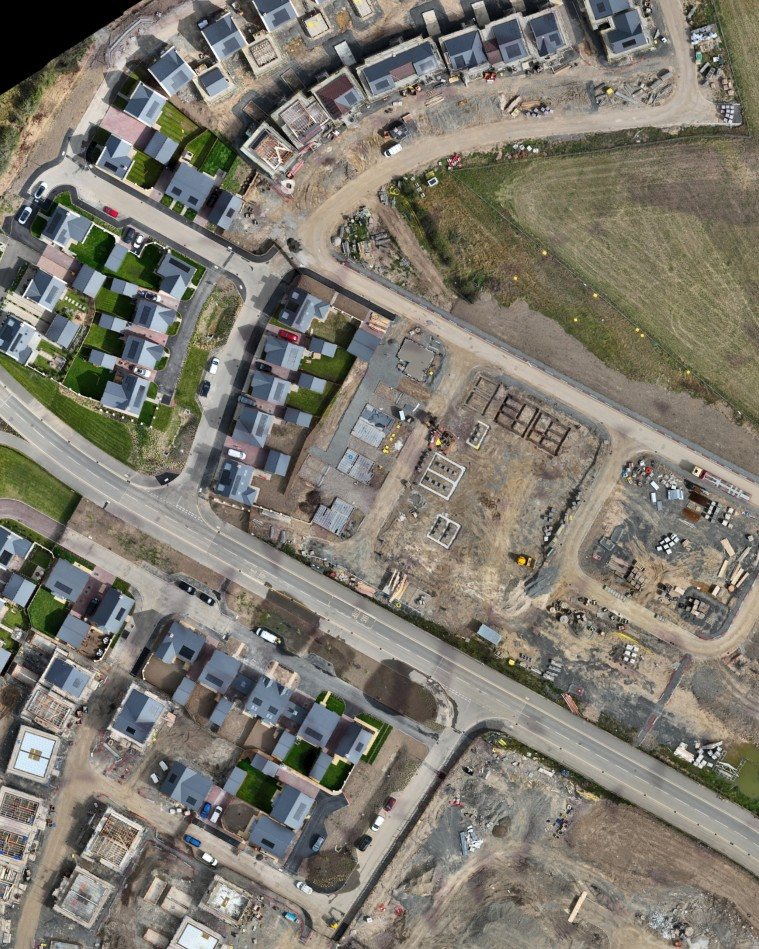
- OrthomosaicGeoTIFFAn optional visual map of the whole array
Who uses solar inspections
Solar farm owners and operators
Routine inspection across large ground-mount arrays.
O&M contractors
Targeted maintenance with every anomaly located.
Commercial roof owners
Checks of rooftop systems without roof access.
Installers
Commissioning and warranty evidence.
How the work is done
- ScopeArray size and layout, string details and site access.
- TimingThe flight is booked for strong, steady sunshine.
- FlyThermal and visual capture of every row.
- AnalyseAnomalies documented, checked and located.
- ReportInspection report, anomaly map and CSV list for maintenance.
Getting reliable thermal results
Anomalies show most clearly when the array is in strong, steady sunshine and producing well. Flights are timed for those conditions, and every anomaly is checked against the visual image to rule out reflections and shading before it is reported. A thermal anomaly shows where to look; confirming the electrical cause can need further testing on site.
What affects the result
- Sunshine strength and cloud cover
- Reflections from the sky and nearby objects
- Wind cooling the modules
- Viewing angle across the panels
Solar inspection questions
When can solar panels be inspected?
In strong, steady sunshine with the array producing well, usually from late spring to early autumn and around the middle of the day.
Can you inspect rooftop solar?
Yes. Rooftop systems are inspected from the air without anyone going on the roof, with the building owner's permission.
How are anomalies located?
Every anomaly is placed on a map of the array and listed with its row and module position, so it can be found quickly on site.
Does the system need to be switched off?
No. The inspection is done with the system running normally, because anomalies show while the panels are producing.
Can you repeat the inspection each year?
Yes. Annual inspections on the same plan help show whether earlier anomalies have been resolved and whether new ones have appeared.
Related services
All services